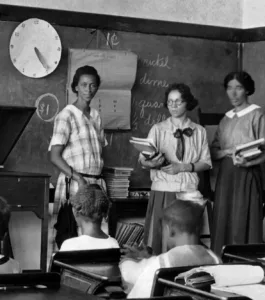
During the Jim Crow era, Black students and teachers faced unfair and unequal schools. Even though the laws of the time tried to limit what Black children could learn, many Black educators found creative and courageous ways to teach the truth about African American history, pride, and culture. They often taught more than what was in the approved curriculum to make sure their students learned information that empowered them and helped them understand their identity.
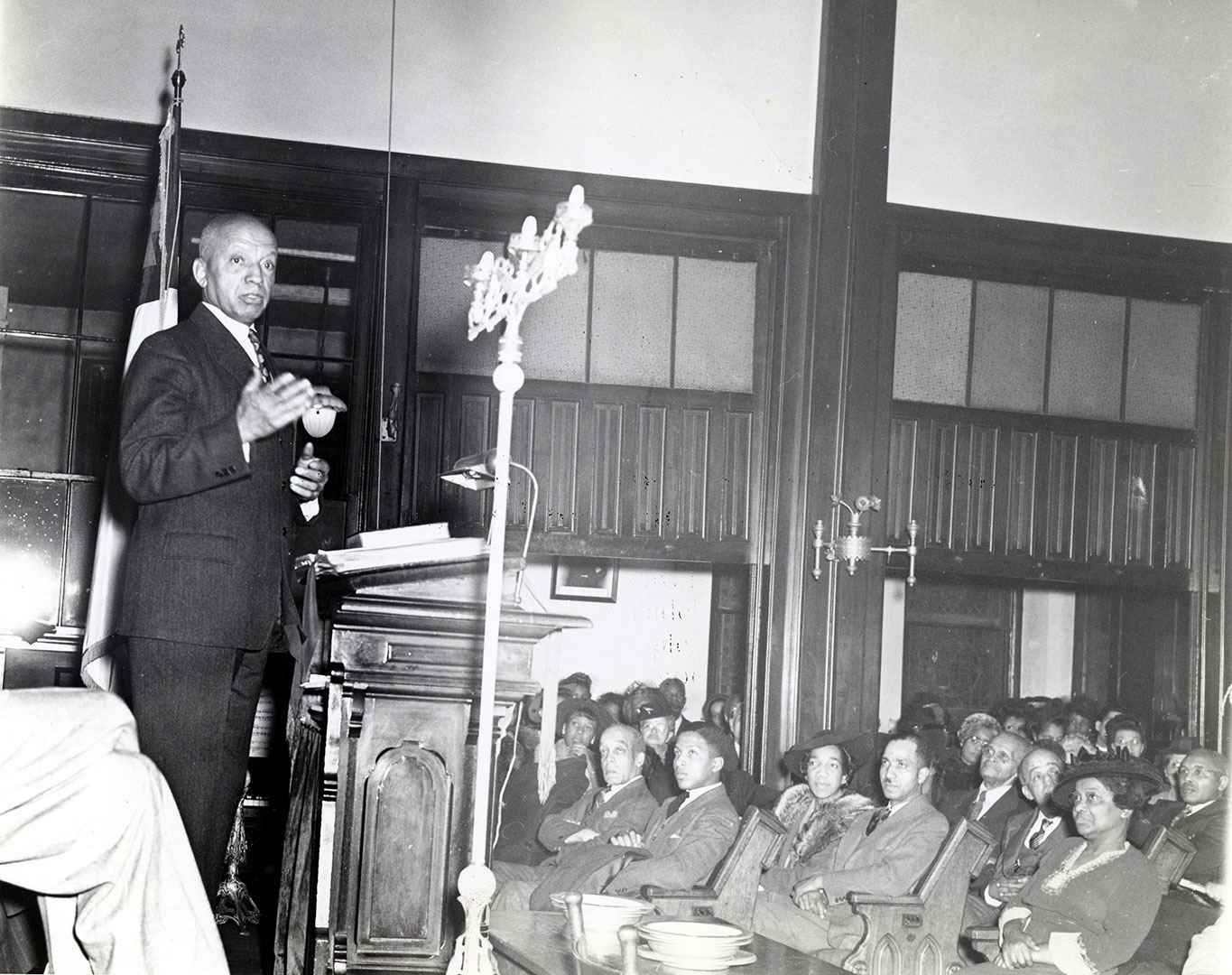
Leaders like Carter G. Woodson, the creator of Negro History Week (which later became Black History Month), and Anna Julia Cooper, a scholar and educational leader, believed that learning was a powerful tool for fighting injustice. Through their writing, teaching, and advocacy, they encouraged students to think deeply, challenge unfair systems, and believe in their own potential.
By learning this history, students will see how powerful education can be in creating change.
New Jersey Student Learning Standards:
-
6.1.8.HistoryCC.1 – Compare the cultures, social structures, and unequal conditions experienced by various groups in the United States.
-
6.1.8.HistoryUP.3 – Evaluate how individuals and groups used ideas and actions to resist oppression and promote change.
-
6.1.8.CivicsPI.3 – Analyze the roles of prominent individuals and groups in shaping American ideals and promoting justice.
Curriculum
- 2 Sections
- 2 Lessons
- Lifetime
- Stage 11
- Stage 21